> For the complete documentation index, see [llms.txt](https://blog.azagra.dev/llms.txt). Markdown versions of documentation pages are available by appending `.md` to page URLs; this page is available as [Markdown](https://blog.azagra.dev/linux/gnome-42-en-linux-mint-21.md).
# Gnome 42.5, en Linux Mint 21.1
Usando como base Linux Mint ([Vera](https://ftp.cixug.es/mint/stable/21.1/linuxmint-21.1-cinnamon-64bit.iso)) con escritorio Cinnamon, procederemos a instalar entorno GNOME 42
Lo primero de todo es tener actualizado el sistema
```shell
sudo apt update && sudo apt upgrade -y
```
\
Si esta el sistema actualizado continuamos, si no, reinicia primero.
Instalamos Gnome
Version minima
```sh
sudo apt install vanilla-gnome-desktop -y
```
O version completa, podemos instalar ambas
```sh
sudo apt install gnome -y
```
En un momento de la instalación, nos pedirá que gestor usar, nos dará 2 opciones, elegimos "**gdm3**", cuando termine reiniciamos el sistema.\
\
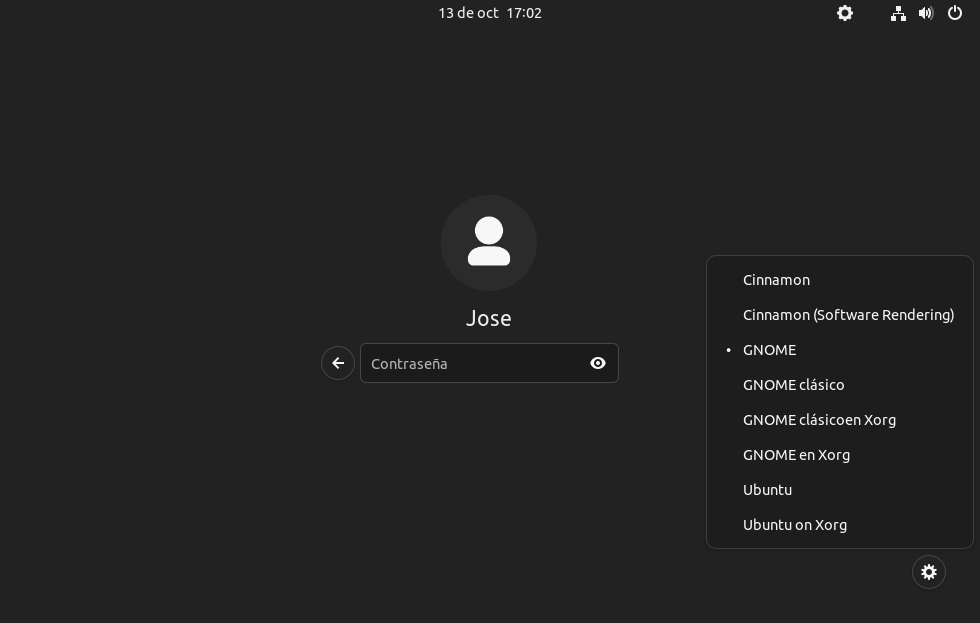
Una vez reiniciado, pulsamos en configuración abajo a la derecha, y elegimos "GNOME"
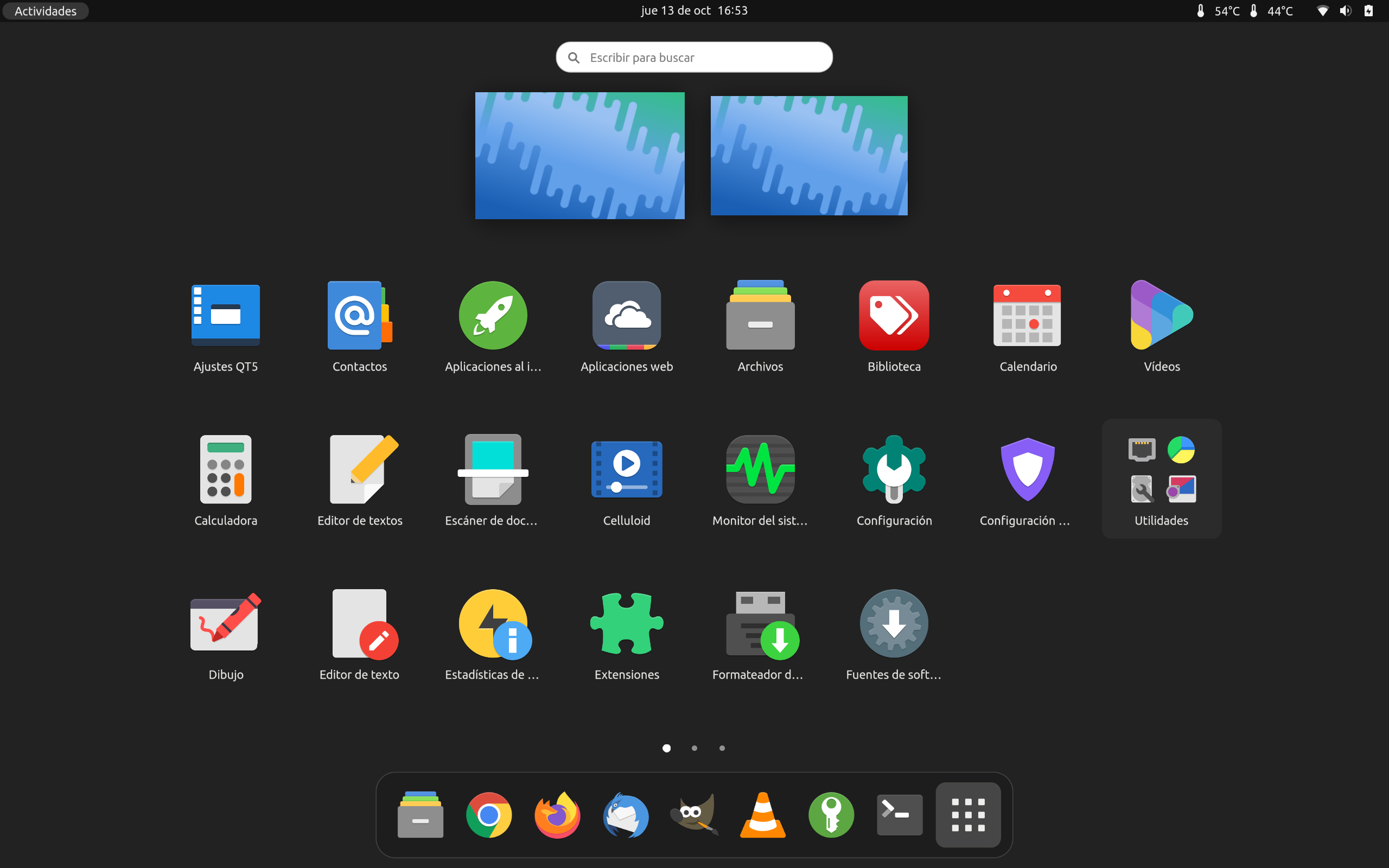
Y ya tenemos Gnome 42
En el momento de escribir este post, van por la version 42.4
Instalar Tweaks e iconos Papirus
```shell
sudo apt install gnome-tweaks papirus-icon-theme -y
```
Después de todos los cambios, reiniciar y a disfrutar!
Instalamos estas extensiones\
\
Esta es para tener una barra de tareas y que las aplicaciones que tengan su servicio en segundo plano podamos acceder a ellas, vease por ejemplo telegram.
{% embed url="" %}
Y esta es para monitorizar el hardware en la barra superior de gnome.
{% embed url="" %}